(Isaiah 22) But instead

At that time the Lord…called you to weep and mourn. He told you to shave your heads in sorrow for your sins…But instead, you dance and play; you slaughter cattle and kill sheep.  You feast on meat and drink wine. You say, “Let’s feast and drink, for tomorrow we die!”

Let’s feast and drink, for tomorrow we die!  A true assessment.  A false response.

(Isaiah 20) For three years!

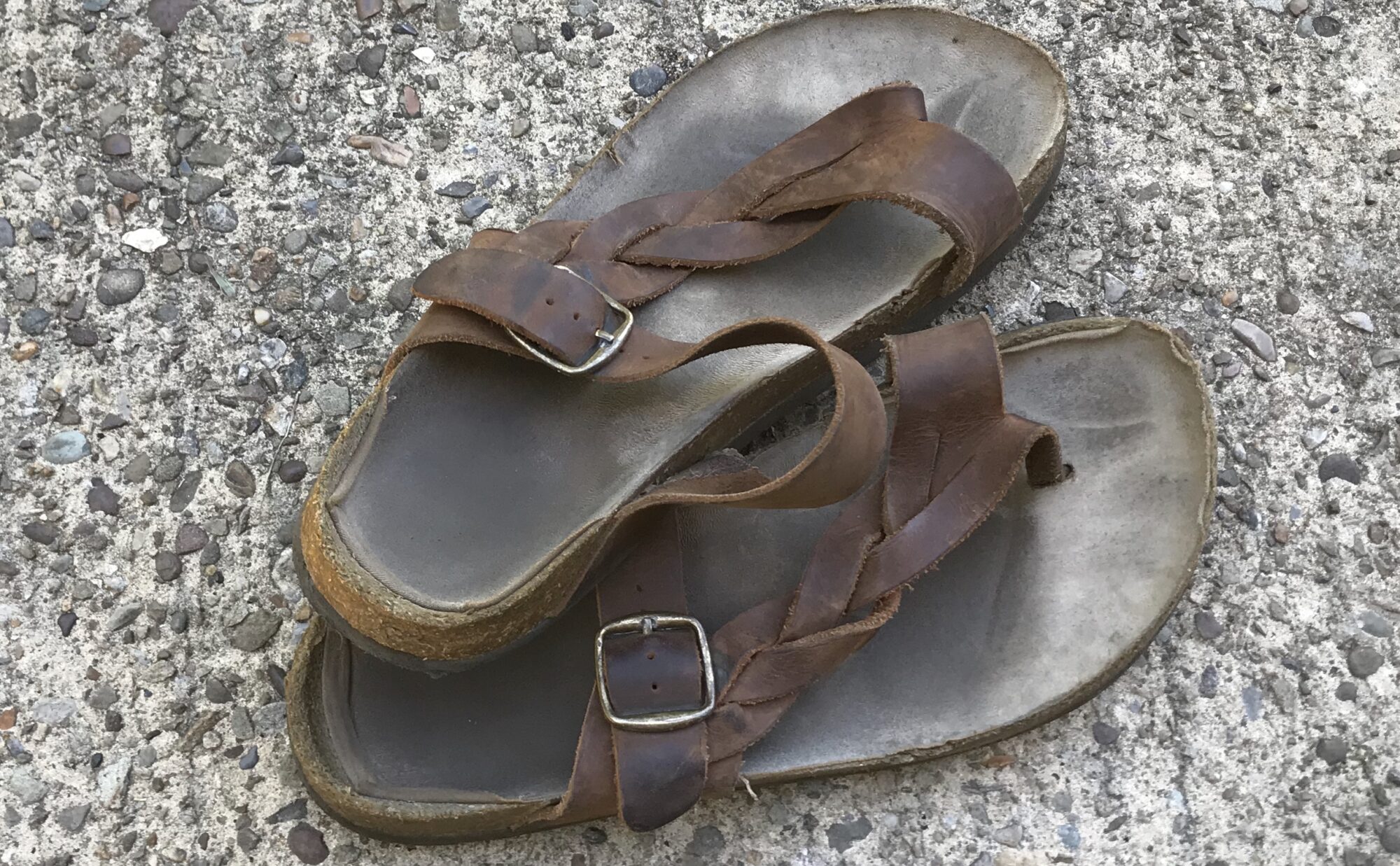
At the same time the Lord spoke by Isaiah the son of Amoz, saying, “Go, and remove the sackcloth from your body, and take your sandals off your feet.” And he did so, walking naked and barefoot. Then the Lord said, “Just as My servant Isaiah has walked naked and barefoot three years  for  a sign and a wonder against Egypt and Ethiopia, so shall the king of Assyria lead away the Egyptians as prisoners and the Ethiopians as captives, young and old, naked and barefoot, with their buttocks uncovered, to the shame of Egypt.”

The prophets of old were at times instructed to do strange things, in order to arrest the attention of the people.  Here Isaiah walks around naked and barefoot, for three years!

(Isaiah 19) Every tribe and people

In that day Israel will be one of three with Egypt and Assyria blessing in the midst of the land, whom the Lord of hosts shall bless, saying, “Blessed  is  Egypt My people, and Assyria the work of My hands, and Israel My inheritance.”

I am at a loss to really understand what is being said here. Certainly God is not willing that any should perish, but that all—from every tribe and people—should come to repentance.

(Isaiah 18) I will take my rest

All inhabitants of the world and dwellers on the earth: When He lifts up a banner on the mountains, you see  it,  and when He blows a trumpet, you hear  it.  For so the Lord said to me, “I will take My rest,  and I will look from My dwelling place like clear heat in sunshine, like a cloud of dew in the heat of harvest.  For before the harvest, when the bud is perfect and the sour grape is ripening in the flower, [I, the LORD God,] will both cut off the sprigs with pruning hooks and take away  and  cut down the branches.”

In the days of Isaiah, Ethiopia was a major world power, ruling Egypt and a chief rival to Assyria. Since Judah was caught in the middle between this conflict, it might make sense for Judah to align herself with Ethiopia against Assyria. But here the LORD God rejects the alliance with Ethiopia, because He is more than able to deal with the Assyrians Himself. He can take His rest without the help of the Ethiopians. If God wanted to muster an army against Assyria, He would have raised a banner or sounded a trumpet. He is fully able to do it, and would do it when the time is right.

Interestingly, there is no rebuke or judgment against Ethiopia announced in this chapter. It wasn’t as if God was going to judge Ethiopia for their offer of an alliance. Perhaps the idea is that it is a well-intentioned but unnecessary offer. Instead, Judah was to trust in the LORD!
(Isaiah 17) Idolaters

In that day a man will look to his Maker, and his eyes will have respect for the Holy One of Israel. He will not look to the altars, the work of his hands; he will not respect what his fingers have made, nor the wooden images nor the incense altars.

At least idolators in ancient times acknowledged that god was outside them, above them. They knew their own hands had carved the images, but they suspended that truth in order to fully give themselves over to the pagan ceremony.

Idolators today are really atheists at the core; there is no god outside them at all. The only gods that exist are inside them. Strangely, these modern “gods” are every bit a product of vain imaginations as were those of the pagan past.

(Isaiah 16) Shines brightly

In mercy the throne will be established; and One will sit on it in truth, in the tabernacle of David, judging and seeking justice and hastening righteousness.

Even in the darkest of times, the light of God’s unfailing promise fulfilled in his son shines brightly.

(Isaiah 15) A burden

The burden against Moab:  Because in the night Ar of Moab is laid waste and destroyed, because in the night Kir of Moab is laid waste and destroyed.

The prophet here describes his stewardship of the words of God as a burden. Sin is a burden on the entire human race, even God himself, who alone is able to bear it.

(Isaiah 14) God is not Mighty Mouse

For the Lord of hosts has purposed, and who will annul  it?  His hand  is  stretched out, and who will turn it back?

Those of us with a few gray hairs will remember the famous cartoon “Mighty Mouse”.  It was probably my favorite back in the day. If you’re like me, the little jingle is still stored away in your brain’s attic: “Here he comes to save the day! You know that Mighty Mouse is on his way!”

God is not Mighty Mouse. Yes, He surely has come to save the day, but in a way far different than any of us could have imagined.  Mighty Mouse would have swooped down from the sky and with one big punch knocked out the dastardly duo of sin and death.  But the Bible is not a comic book, life is certainly not a cartoon, and sin and death are all too real enemies. 

When God “swooped down”, so to speak, in the person of his son, Jesus Christ, he conquered death by dying. He conquered sin by becoming sin—for us. And He did it so that we who believe could be “more than conquerers through him who loved us”.

(Isaiah 13) That day

Therefore I will shake the heavens, and the earth will move out of her place, in the wrath of the Lord of hosts and in the day of His fierce anger.

It says what it says. It is difficult to imagine what that day will be like.