“And fire came out from before the Lord and consumed the burnt offering… and when all the people saw it, they shouted and fell on their faces.”
This was no made-up, meaningless ritual. This was ordained of God.
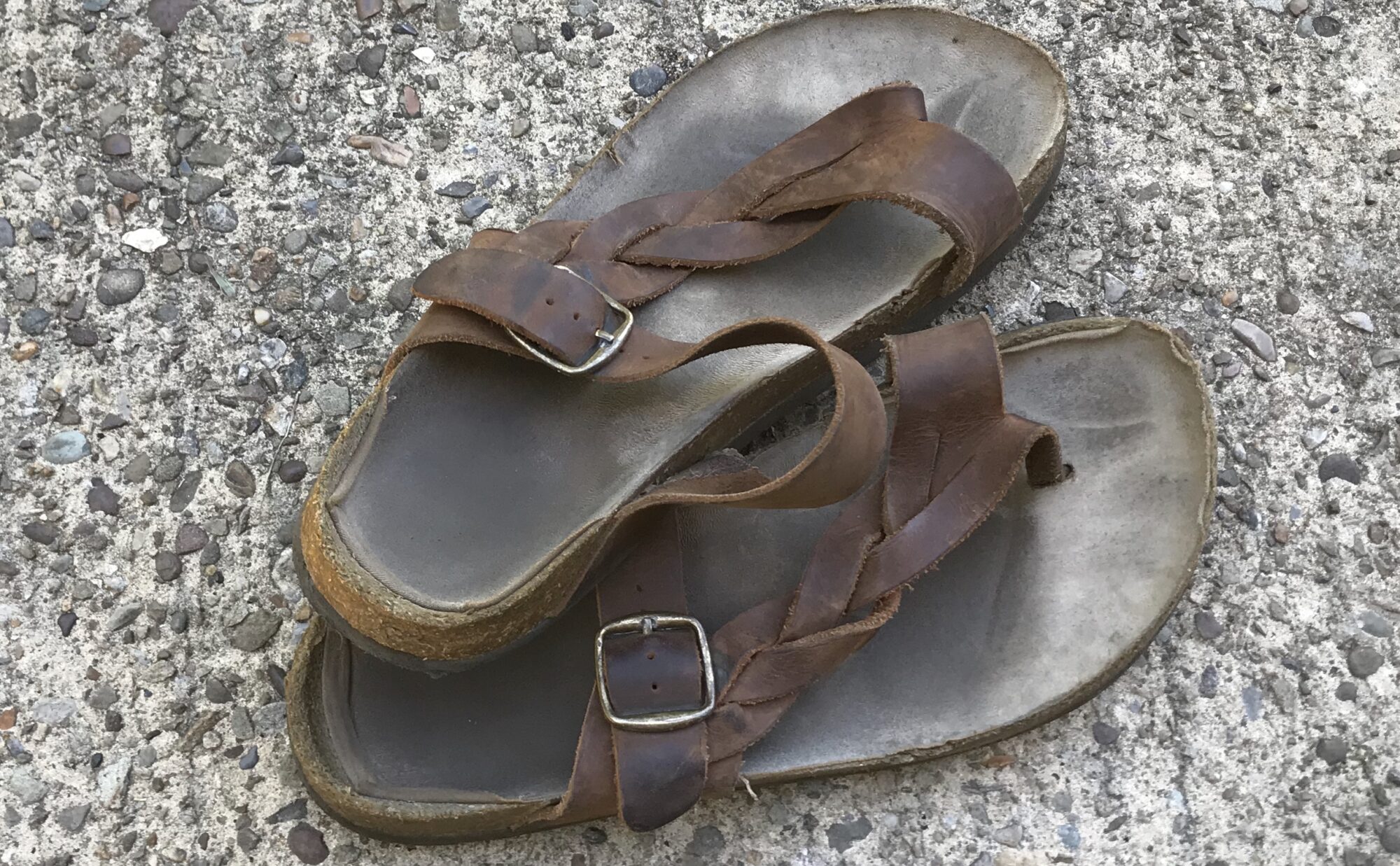
For forty years I led you through the desert … yet your sandals did not wear out." Duet. 29:5
“And fire came out from before the Lord and consumed the burnt offering… and when all the people saw it, they shouted and fell on their faces.”
This was no made-up, meaningless ritual. This was ordained of God.
When Moses was on Mt. Sinai, the LORD commanded him to instruct the people to observe the burnt offering, the sin offering, the guilt offering, the grain offering, the peace offering and the wave offering.
Communion with God may be costly, but it is surely a bargain at any price.
“Fire shall be kept burning on the altar continually; it shall not go out.”
Is not my heart to be an altar, and God’s love the flame? O may it never go out!
“If you cannot afford to bring two turtledoves or two young pigeons, you may two quarts of choice flour for your sin offering…”
The need for redemption is universal – whether rich or poor.
What can wash away my sin? What can make me whole again?
“All fat is the Lord’s. …eat neither fat nor blood.”
The Lord knows what is good for us and what is not good for us. The things in life that are good for us we should receive with thanksgiving. The things that are not good for us, no matter how appealing they may be to us, should be offered up, as it were, to the Lord.
“No grain offering that you bring to the Lord shall be made with leaven.”
We have nothing to offer the eternal Lord but ourselves. But He insists that we do it wholeheartedly.
“Slaughter the animal on the north side of the altar in the Lord’s presence.”
On the north side. Not just any side. Such divine attention to detail. The Lamb of God, the Messiah, would be crucified outside the city on the north side of the city. Moses and the people of Israel couldn’t have understood the prophetic significance of this command. God did.
“Replace the evil years with good.”
The Israelites had been slaves in Egypt for four hundred bitter years. They had been freed from Pharoah’s grasp by God’s intervention, and were now on a long journey through the wildnerness to the promised land.
They were the recipients of the lavish grace of God. God was actually dwelling with them, leading them forward. It was theirs only to trust and obey.
“All this was done just as the Lord commanded Moses.”
When Moses was alone with God on Mt. Sinai, He gave him the Ten Commandments. But He also gave him very detailed instructions – building plans – for the Tabernacle, the Ark of the Covenant, the gold altar, the gold lampstand, the wash basin, the curtains, even the utensils to be used at the altar. God also gave Moses the exquisite design for the priestly garments to be worn by Aaron and his sons.
Literally tons of silver and gold were used in the building of the sacred tabernacle. Much of it, no doubt, had been given to the Israelites when they were driven out of Egypt. It was pagan treasure now sanctified and fashioned for holy use.
