“Now if you will obey me and keep my covenant, you will be my own special treasure.”
God is not arbitrary. He is not capricious. His plans are from everlasting. He keeps his promises.
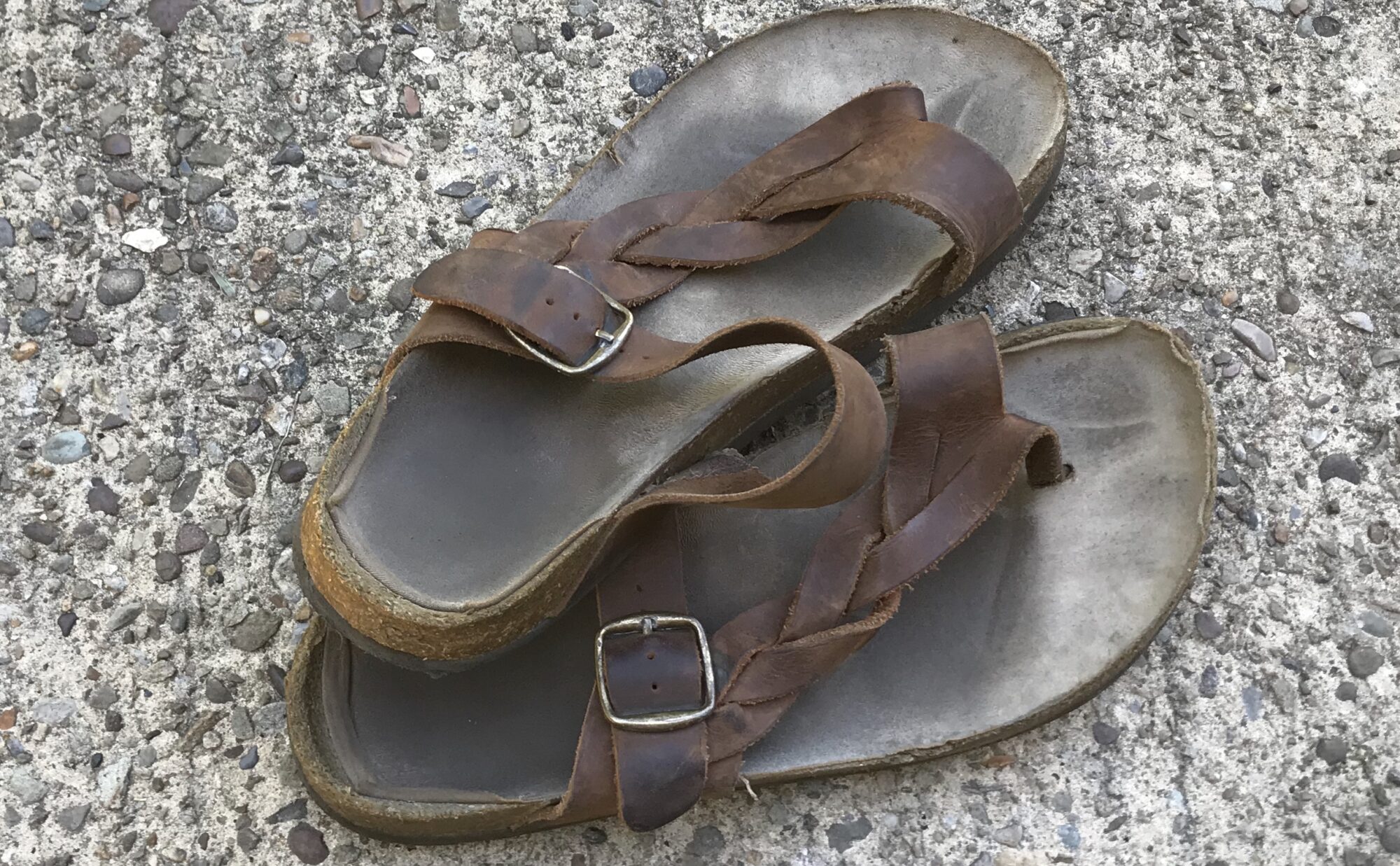
For forty years I led you through the desert … yet your sandals did not wear out." Duet. 29:5
“Now if you will obey me and keep my covenant, you will be my own special treasure.”
God is not arbitrary. He is not capricious. His plans are from everlasting. He keeps his promises.
“This job is too heavy a burden for you to handle all by yourself.”
Moses, the man of God, benefited from the sage advice of his father-in-law, Jethro. Sometimes God’s instructions come to us through the advice of those closest to us.
“Moses named the place Massah (which means “test”) … because the people of Israel argued with Moses and tested the Lord by saying, “Is the Lord here with us or not?”
They “tested” the Lord – meaning, they tried his patience.
And yet the people of Israel framed the question as it should be framed: “Is the Lord here with us or not?”
The answer is either yes or no. He either is or he is not. It’s one or the other. It’s either black or it’s white. It’s either everything or it’s nothing. The answer is not sometimes yes and other times no. It is not, “It used to be yes, but now it is no”. The God of Israel is a covenant-keeping God.
“Then the whole community of Israel set out from Elim, and journeyed into the wilderness of Sin.”
Elim and the widerness of Sin were real places, but it almost sounds metaphorical. Elim was an oasis with seventy palm trees and twelve springs of fresh water. Sin was a barren wilderness.
The people would much rather have stayed in Elim, especially had they known what lay ahead. But God was leading them. The God of Israel – the God of Moses – was determined to show his faithfulness to them, their physical circumstances notwithstanding.
Life itself is like a journey through a wilderness. Sometimes you set up camp by an oasis, as the Israelites did at Elim. Sometimes you push on until you find water, only to be disheartened when it is bitter to drink, as was the case at Marah.
God is either leading us or he is not. But he is not leading us one day, and abandoning us the next. That he is not doing.
“It’s better to be a slave in Egypt than a corpse in the wilderness.”
What a remarkable statement! The Israelites were barely out of Egypt when they said this. Did they not remember how loathsome their lives were as slaves in Egypt? Did they not realize that the God of Israel who had fulfilled his promise to rescue them by a mighty hand was able now to deliver them from Pharoah’s pursuit? Aren’t some things more precious than life itself?
The faith God gives us is not something to be held loosely in our hands. Rather, it must be gripped firmly, as one who seizes a prize.
“When Pharaoh finally let the people go, God did not lead them along the main road that runs through Philistine territory, even though that was the shortest route to the Promised Land.? God said, ‘If the people are faced with a battle, they might change their minds and return to Egypt.’??So God led them in a roundabout way through the wilderness toward the Red Sea.”
Sometimes it may seem that God is leading us in a roundabout way.? The important thing to keep in mind is that it is God who is leading.? He knows our weaknesses.? He remembers our frame. And even if to our limited understanding it seems the way through the wilderness is roundabout, it is still through the wilderness.
“I will execute judgment against the gods of Egypt, for I am the LORD! But the blood on your doorposts will serve as a sign marking the houses where you are staying. When I see the blood, I will pass over you.”
The LORD knew, of course, the houses where the Israelites were staying. By making the Israelites mark their doorposts with the blood of a sacrificial lamb, he was making an indelible impression on them. He was also pointing to the future…
“But the LORD hardened Pharoah’s heart, and he would not let the Israelites go.”
Despite nine terrible plagues, Pharoah stubbornly refused to obey the LORD.
1. Waters turned to blood
2. Frogs
3. Gnats
4. Flies
5. A plague on livestock
6. Festering boils
7. Hail
8. Locusts
9. Thick darkness
Pharoah made his choice. God locked it in.
“Do you not yet realize that Egypt is ruined?” Pharoah’s officials finally got it. They understood the futility of fighting against the God of Israel.
But even two more dreadful plagues – the swarming locusts and the thick darkness – “darkness that can be felt” – did not convince Pharoah.
