It hasn’t changed. Some things are wrong. Some things are an abomination.
The God of the universe, of this world and the next, is a righteous God. What a wonderful, wonderful reality.
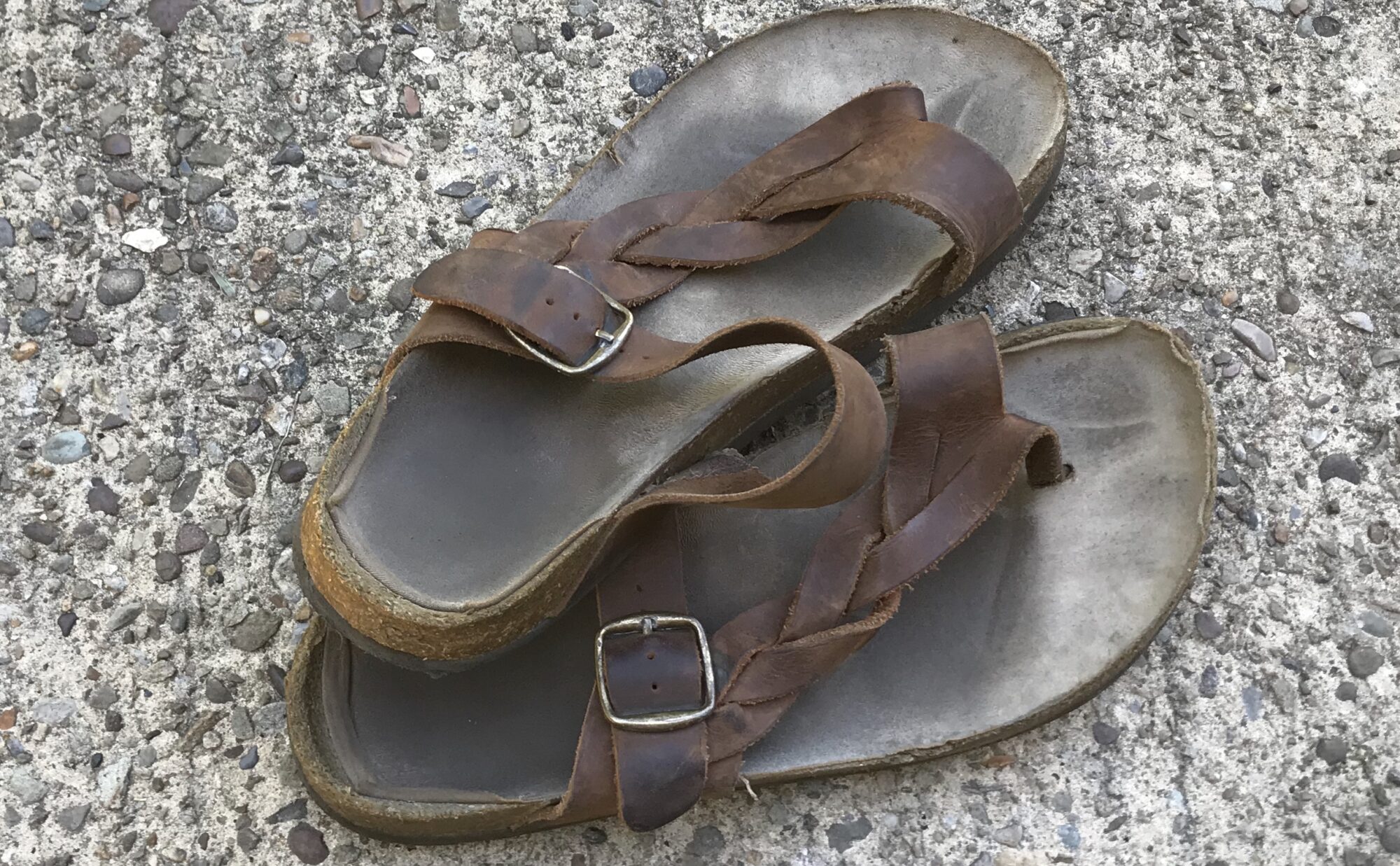
For forty years I led you through the desert … yet your sandals did not wear out." Duet. 29:5
It hasn’t changed. Some things are wrong. Some things are an abomination.
The God of the universe, of this world and the next, is a righteous God. What a wonderful, wonderful reality.
“For it is the blood that makes atonement.”
The people of Israel were forbidden to offer a sacrifice in the open field. They were commanded to bring their sacrifices to the altar in front of the tent of meeting. Apparently some in the camp were offering sacrifices to goat demons on their own.
There is but one God. There is no other. There is no other reality. There is no other destiny. There is no other way of salvation.
And God’s way of salvation involved the shedding of blood.
“But in this way Aaron shall come into the Holy Place…”
The LORD went to great lengths to impress on Moses and Aaron and all the people that he was a holy God, a God set apart, a God before whom sin must be dealt with.
After a person recovered from a disease or an illness, he was considered unclean for yet seven more days. On the eighth day he was to bring two turtledoves or two pigeons to the priest – one for a sin offering and one for a burnt offering.
Why was it necessary to offer sacrifices when one recovered from an illness or a disease? For one thing, it underscored the fact that physical health isn’t the same as spiritual health. The inside of a person is far more important than the outside. The problem on the inside is the result of sin, for which there is no atonement without the shedding of blood.
When a person was pronounced clean from leprosy, the priest was to dip his finger in the blood of the sacrificial animal, and apply it to the right ear, and the right hand, and the right foot of the person.
After doing so, the priest then dipped his finger in oil, and applied it to the person in similar fashion. The remainder of the oil was to be poured out on his head.
First blood, then oil.
“This is the law… To determine whether it is clean or unclean.”
The LORD gave Moses specific instructions regarding leprous diseases.
It is interesting to note that He did not eradicate leprosy; He gave them instructions as to how to deal with it.
“…one for a burnt offering and the other for a sin offering.”
The people were commanded to offer up both a sin offering and a burnt offering. The Lord must intend that atonement and commitment should go together.
“…to make a distinction between the unclean and the clean.”
Even though, in the New Testament, all foods have been declared clean, it is still important for us to be discerning in life about things clean and unclean. What will please the Lord? “Be holy, for I am holy.”
“And Aaron held his peace.”
The Lord’s way for the Lord’s purpose in the Lord’s time. Nothing else.
“And fire came out from before the Lord and consumed the burnt offering… and when all the people saw it, they shouted and fell on their faces.”
This was no made-up, meaningless ritual. This was ordained of God.
